

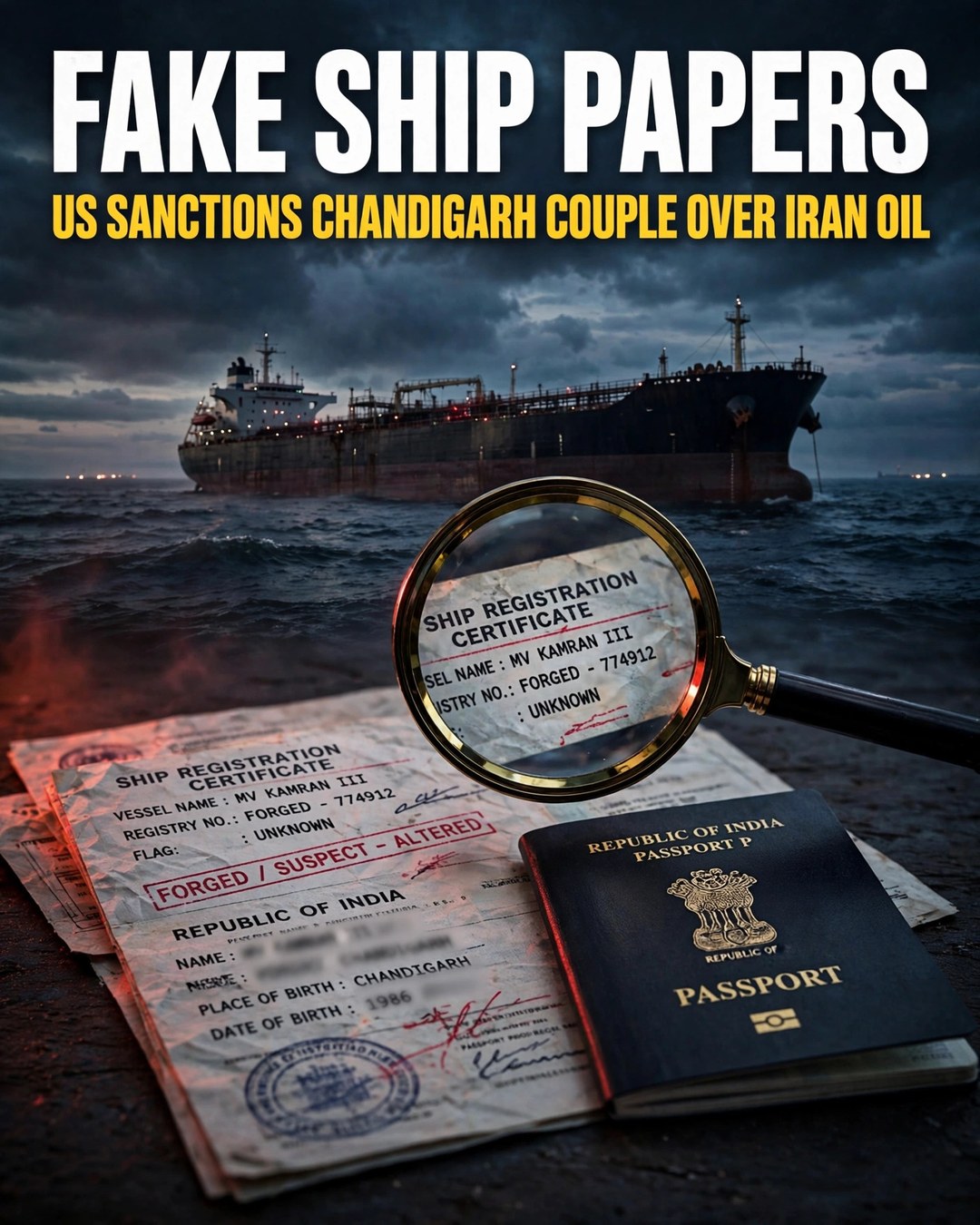
Oil that cannot be sold legally still needs a ship, a flag and a certificate. According to the US Treasury, that is where a Chandigarh-based couple came in: allegedly running what Treasury called a “vast criminal network” that gave vessels carrying Iranian petroleum fake identities — false registries, false certifications — so the oil could move as if it were legitimate cargo. The designations, announced on 4 November under an operation with a deliberately blunt name, Operation Economic Outcast, are the latest move in Washington’s campaign to cut off the oil revenue it says Iran uses to fund its war effort. Everything in this article about what the couple did is an allegation by the US Treasury. It has not been proven in court.
What the Treasury announced
The US Treasury on 4 November sanctioned companies and individuals in India and Turkiye accused of helping Iran evade oil-export restrictions. The action falls under “Operation Economic Outcast”, announced on 24 August 2026 by Treasury Secretary Scott Bessent and aimed at cutting the oil revenue that the US says Iran uses to fund its war effort.
The timing was pointed: the sanctions were announced a day after Democrats won both houses of Congress in the midterm elections. The Treasury did not link the two events, and this article does not claim a connection — but the sequence is part of the context in which the announcement landed.
The Chandigarh couple at the centre
Named in the action were Chandigarh-based Suniel Kumar Sharma and his wife Jaspreet Preeti Shahid. The Treasury accuses them of running a “vast criminal network” faking ship registries — for Guyana, Laos and others — and certifications for vessels carrying Iranian petroleum, including ships for Iran’s military and proxies.
The alleged method is the heart of the case as Treasury presents it. A ship carrying sanctioned oil needs to look legitimate: a flag state, a registry entry, a certificate. Fake those, the allegation runs, and the vessel can load, sail and unload while appearing to be an ordinary commercial ship under an ordinary flag. Guyana and Laos are named as examples of registries allegedly faked; the Treasury’s allegation covers other registries as well.
It is worth being precise about what “named” means here. Being designated by the US Treasury is an executive action with immediate financial consequences — assets under US jurisdiction are blocked, and US persons are barred from dealing with those designated. It is not a criminal conviction. The claims about the couple’s network are allegations made by the Treasury, and they have not been tested or proven in court.
The legal basis
The sanctions were imposed under Executive Order 13902, which covers Iran’s petroleum, petrochemical and aviation sectors. The order is the legal tool the US has used for successive rounds of Iran sanctions, and it allows the Treasury to designate individuals and entities it determines operate in, or support, those sectors.
For the couple and the companies named alongside them, designation means being cut off from the US financial system and from any business that touches it. For shipping, that is a severe penalty in itself: most international shipping, insurance and finance runs through dollars or US-linked institutions at some point, which is exactly why the US uses sanctions as a tool against oil smuggling networks.
The warning — and what remains alleged
Treasury Secretary Scott Bessent’s warning was blunt: those supporting Tehran are “either with us or against us”. The line is a statement of policy, not evidence, but it signals how the administration intends the operation to be read — as a choice forced on anyone doing business connected to Iranian oil, not as a narrow enforcement action against two people.
What is not established is the scale of the network beyond what the Treasury alleged. The Treasury’s own description — a “vast criminal network” — is its characterisation, and the full extent of the alleged operation has not been independently verified in the sources checked for this article. That is why this article uses “accused” and “alleged” throughout: the designations are facts, the underlying conduct is alleged, and the difference between the two is the difference between reporting a sanction and convicting a person.
Who did the US sanction on 4 November?
The US Treasury sanctioned companies and individuals in India and Turkiye accused of helping Iran evade oil-export restrictions, including Chandigarh-based Suniel Kumar Sharma and his wife Jaspreet Preeti Shahid.
What are they accused of?
Running a network that allegedly faked ship registries — for Guyana, Laos and others — and certifications for vessels carrying Iranian petroleum. The claims are allegations, not proven in court.
What is Operation Economic Outcast?
A US Treasury operation announced on 24 August 2026 by Treasury Secretary Scott Bessent, aimed at cutting oil revenue the US says Iran uses to fund its war effort.