

On Thursday, 5 November, the president of Paraguay resigned. On Friday, he was removed from office anyway — and by the evening, Paraguay had a new president, a former president under house arrest, and the same banking crisis that started it all.
A resignation Congress refused
Santiago Peña, 47, announced his resignation in a pre-recorded video on Thursday, 5 November, saying no position could be above the country. Minutes later, the lower house of Congress voted 78–0 to impeach him. Attorney General Emiliano Rolón Fernández has opened three criminal investigations — into Peña and officials, into the supervision of the regulator, and into why state money was deposited at ueno in the first place.
Peña’s lawyers argued the resignation should have been accepted instead of impeachment. Congress did not accept it. That distinction mattered enormously: a president who resigns leaves with the honours of a former president — including a lifetime Senate seat and immunity. A president removed by impeachment does not.
An important correction follows from this. NewsXphere’s 6 November article stated that Congress had accepted the resignation and that Vice-President Pedro Alliana had assumed the presidency, based on the expectation reported by Reuters and AP on 5 November. It did not. Later reporting is clear: the resignation was put on hold, the impeachment went ahead, and Alliana became president by succession after removal, not by accepted resignation. The corrected version of that article is published alongside this one.
The Senate vote and the swearing-in
The impeachment trial concluded on Friday 6 November, as ruling-party Senator Derlis Maidana had said it would. All 44 senators present voted to remove Peña for poor performance of his duties; one senator was absent. Senate President Basilio Núñez declared him guilty, and the removal stripped Peña of his lifetime Senate seat and his immunity.
Within the hour, Vice-President Pedro Alliana was sworn in as president before a special joint session of Congress, to complete the term through August 2028. Antonio Barrios, a former health minister, takes over as vice-president. Alliana, 52, is a former Speaker of the Chamber of Deputies. Peña is the second Paraguayan president ousted by impeachment since the end of General Alfredo Stroessner’s dictatorship in 1989.
The bank at the centre of it
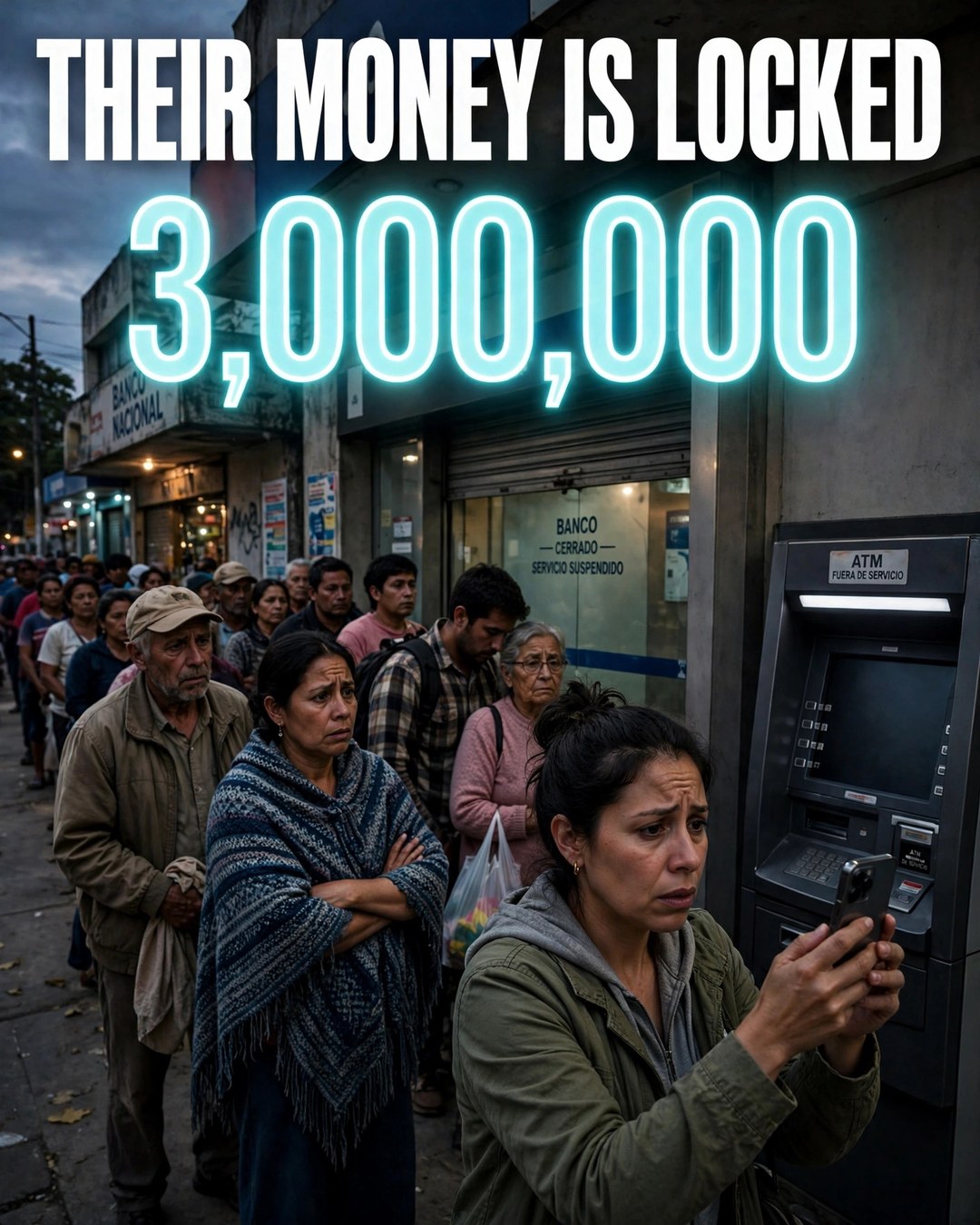
The trigger was ueno, a digital bank seized by the central bank on Tuesday, 3 November, after its solvency ratio fell to 5.56% against a legal minimum of 12%. About three million people in a country of 6.5 million — close to half the population — have been locked out of their accounts, cards and ATMs. The bank administered close to $850 million in public funds. The central bank chief resigned on Tuesday.
Eight ueno executives were detained on 3 November; a judge has since ordered six directors into pretrial detention and two under house arrest, and 27 people have been charged in total, including controlling shareholder Miguel Vázquez. Reuters has verified that Peña was a shareholder until March 2025 in Grupo Vazquez, the group that controls ueno — the fact that turned a banking failure into a political one.
Three million customers cannot access their money — salaries that cannot be withdrawn, businesses that cannot pay suppliers, families that cannot buy food with money that is, on paper, theirs. The bank’s collapse is the story; the presidential crisis is what happened when the collapse reached the people who were supposed to be supervising it.
House arrest — and Saturday’s charges
Minutes after the Senate vote on Friday, police and prosecutors arrived at Peña’s residence in Asunción to enforce a house arrest order. Prosecutor Silvia Margarita González Vester told reporters he was placed under house arrest on suspicion of breach of trust and influence peddling, the most serious of which carry up to 10 years in prison.
On Saturday 7 November, Peña appeared before prosecutors in Asunción and was later charged with breach of trust, as instigator, and administration for personal benefit. The charges are allegations, not convictions, and the case will now move through the Paraguayan courts — with Peña no longer protected by the immunity he lost when the Senate removed him.
What is still unresolved
The trial is over and the succession is settled, but the problem underneath it is not. A digital bank grew fast, took in public money, and collapsed when its solvency was less than half the legal minimum. The people who were supposed to watch it did not — and the regulator is now itself under criminal investigation. Three million people are waiting for their money, and for an answer to one question: who pays them back, and when?
A president resigned, and the system could not even process the resignation cleanly — it impeached him instead, removed him unanimously, and put him under house arrest within the hour. In less than 48 hours, a banking collapse became a crime to be investigated and a presidency to be ended.
Who is the president of Paraguay now?
Pedro Alliana, sworn in on Friday 6 November 2026 after the Senate removed Santiago Peña. He serves until August 2028, with Antonio Barrios as vice-president.
Was Peña’s resignation accepted?
No. Congress did not accept the resignation — his lawyers had argued it should have been accepted instead of impeachment. The Senate removed him 44–0, with one senator absent.
What happened to Peña after his removal?
He was placed under house arrest on Friday 6 November on suspicion of breach of trust and influence peddling. On Saturday 7 November he appeared before prosecutors and was charged with breach of trust (as instigator) and administration for personal benefit.
How many people are affected by the ueno collapse?
About three million customers — close to half of Paraguay’s 6.5 million people — are locked out of their accounts. The bank administered close to $850 million in public funds.