

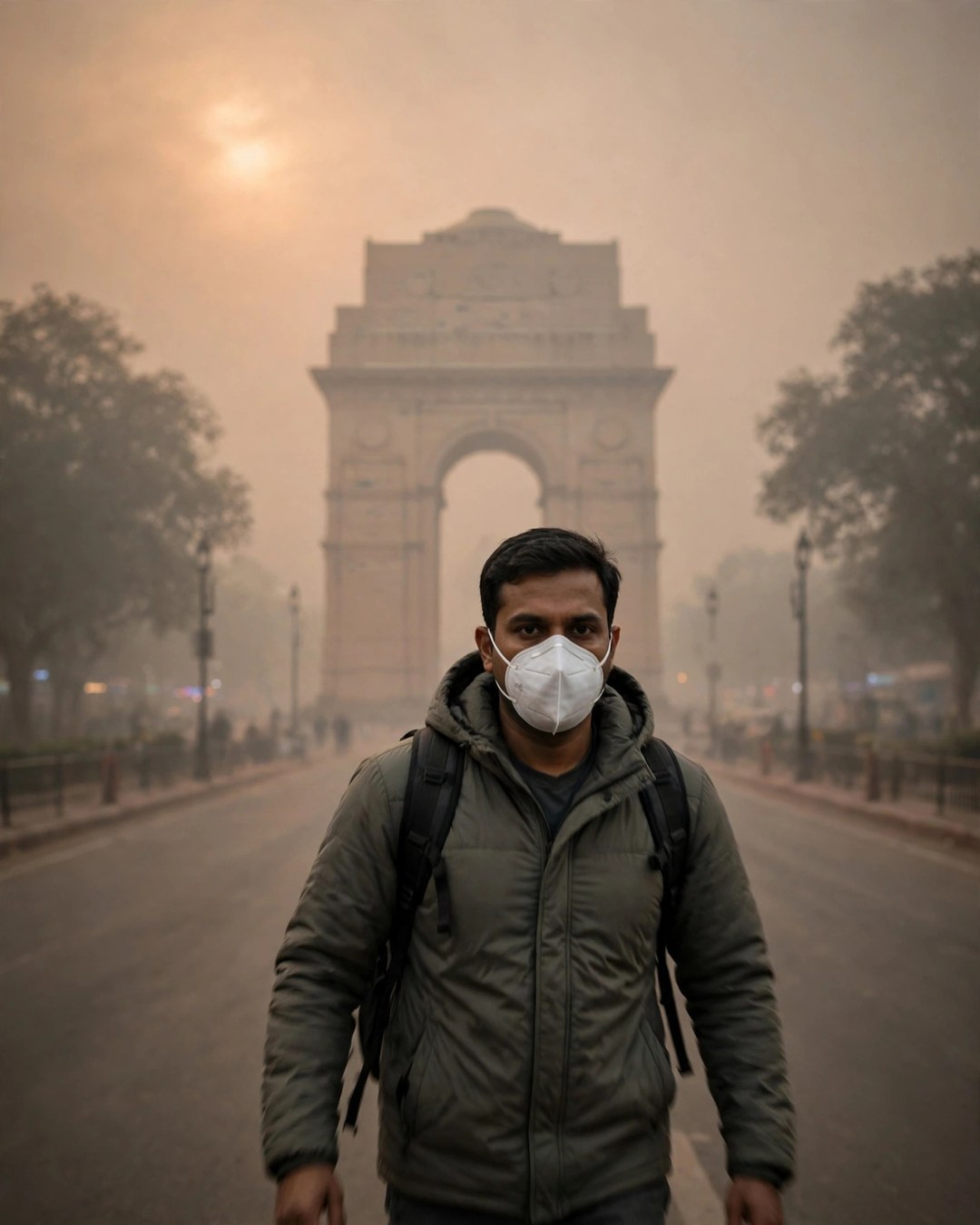
Delhi woke up on Monday to the morning after Diwali — and to air the Central Pollution Control Board rated 368, “very poor”, at 7 am. That single number hides a sharper picture underneath it: 15 of the 54 stations reporting had crossed into “severe”, every station was above 200, and at Akshardham the fine particulate matter had hit 760.99 micrograms per cubic metre late on Sunday night — more than 50 times the World Health Organization’s 24-hour guideline. Fireworks had continued past the Supreme Court’s 10 pm deadline — and by Monday morning, the argument was about whether the numbers themselves are real.
Monday morning: 368, very poor
Delhi’s citywide AQI stood at 368 at 7:00 am on Monday 9 November, in the “Very Poor” band, according to the CPCB, as reported by Business Standard, News18 and the Economic Times. Nearby snapshots were 366 at 6:15 am (Outlook India, via the CPCB’s Sameer app) and 370 at 9 am (Khaleej Times) — differences of timing, not disagreement. This article uses the 7 am figure of 368 as its headline number.
Diwali day itself averaged 376, up from 369 on Saturday (Outlook India): the morning after was a continuation, not a recovery.
The stations that went severe
The city average hides the spread. Of the 54 stations reporting valid data on Monday morning, all recorded AQI above 200, 50 registered above 300, and 15 had entered the “severe” category above 400. The worst at 7 am were Burari Crossing at 441 and Sonia Vihar at 441, followed by Vivek Vihar at 437, Delhi Technological University at 434, North Campus and Jahangirpuri at 433, Rohini at 430 and Bawana at 424. (A later snapshot had Sonia Vihar at 449 and Burari at 445 — same stations, different hour.)
The region was in the same band: Bahadurgarh 389, Ghaziabad 366, Faridabad 334, Noida 340, Gurugram 316, Manesar 338 and Greater Noida 293, per CPCB figures reported by News18.
The PM2.5 number that puts it in perspective
AQI is an index; PM2.5 is the pollutant that does most of the damage, and its numbers on Sunday night were extreme. According to Delhi Pollution Control Committee data, PM2.5 at Akshardham reached 760.99 micrograms per cubic metre at 11 pm on Sunday — more than 50 times the World Health Organization’s 24-hour guideline of 15, as reported by Business Standard.
That figure is a station-level hourly reading, not a city average — but it is the right scale for what people in east Delhi were breathing late on Diwali night. Safdarjung Hospital recorded 135 Diwali-related burn cases over 7–8 November (129 firecracker-related, 7 surgeries); AIIMS recorded 42 burn injuries, per the Economic Times live blog.
Why the air got this bad — and the rules in force
Fireworks continued past the Supreme Court’s 10 pm deadline; TMC MP Saket Gokhale claimed bursting continued till 3 am in Lutyens’ Delhi, per Times Now on 9 November. The court had allowed only certified green crackers, 6–7 am and 8–10 pm on 7–8 November, with a full ban restored from today, 9 November.
GRAP Stage III has been in force across Delhi-NCR since 6 November, per Outlook India and Business Standard. One outlet, JagranJosh, described the stage as Stage II; this article goes with Stage III. The Early Warning System forecasts air could slip to “severe” from 9 November and stay there for days.
The political row over the numbers
By Monday, the argument had become political, and every claim in it is an allegation to attribute, not assert. AAP’s Saurabh Bhardwaj alleged AQI data manipulation — stations shut down, and 20 new stations placed in green or remote areas. Congress’s Pawan Khera alleged no PM2.5 readings at 25 of 39 stations between 2 and 3 am on 8–9 November. The BJP — Kapil Mishra and Praveen Khandelwal — blamed Punjab stubble burning.
None of those claims has been established by the reporting available, and this article does not present any of them as fact. What can be said is that the row itself matters: when the official number is the basis for GRAP curbs, school decisions and health advice, trust in the number is part of the public-health response.
One caution for readers comparing numbers online: several widely shared figures are not CPCB figures at all — weather.com’s 247 uses its own scale, AQI.in’s 2,283 and Oneindia’s 2,552/1,713 are not CPCB readings, and a Chennai figure of 1,556 from an Instagram screenshot is not official (CPCB Sameer: Chennai 138, moderate, on Sunday). The CPCB number for Delhi on Monday morning is 368.
What to do, and what not to believe
The practical advice: limit outdoor exertion while air is very poor or severe, wear an N95 mask outdoors, keep prescribed inhalers going, and consider air purifiers indoors. The forecast — severe from today, staying there for days — means those precautions are for the week, not one morning.
The number to watch is the CPCB’s 4 pm daily bulletin: it will settle whether Monday was worse than Sunday’s 376 average, and whether the forecast slide into “severe” has begun.
What is Delhi’s AQI today?
368 at 7:00 am on Monday 9 November, “Very Poor”, per the CPCB. Nearby snapshots were 366 at 6:15 am and 370 at 9 am — differences of timing, not disagreement.
How many stations were severe?
15 of the 54 reporting stations were above 400 (“severe”); all 54 were above 200 and 50 above 300. Worst were Burari Crossing and Sonia Vihar at 441.
Is the AQI data being manipulated?
That is an allegation by AAP’s Saurabh Bhardwaj, not an established fact. Congress’s Pawan Khera made a separate allegation about missing PM2.5 readings. Neither has been verified in the reporting available.
What is GRAP Stage III?
The Graded Response Action Plan stage in force across Delhi-NCR since 6 November, applying when air turns severe. The Early Warning System forecasts air could slip to “severe” from 9 November and stay there.