

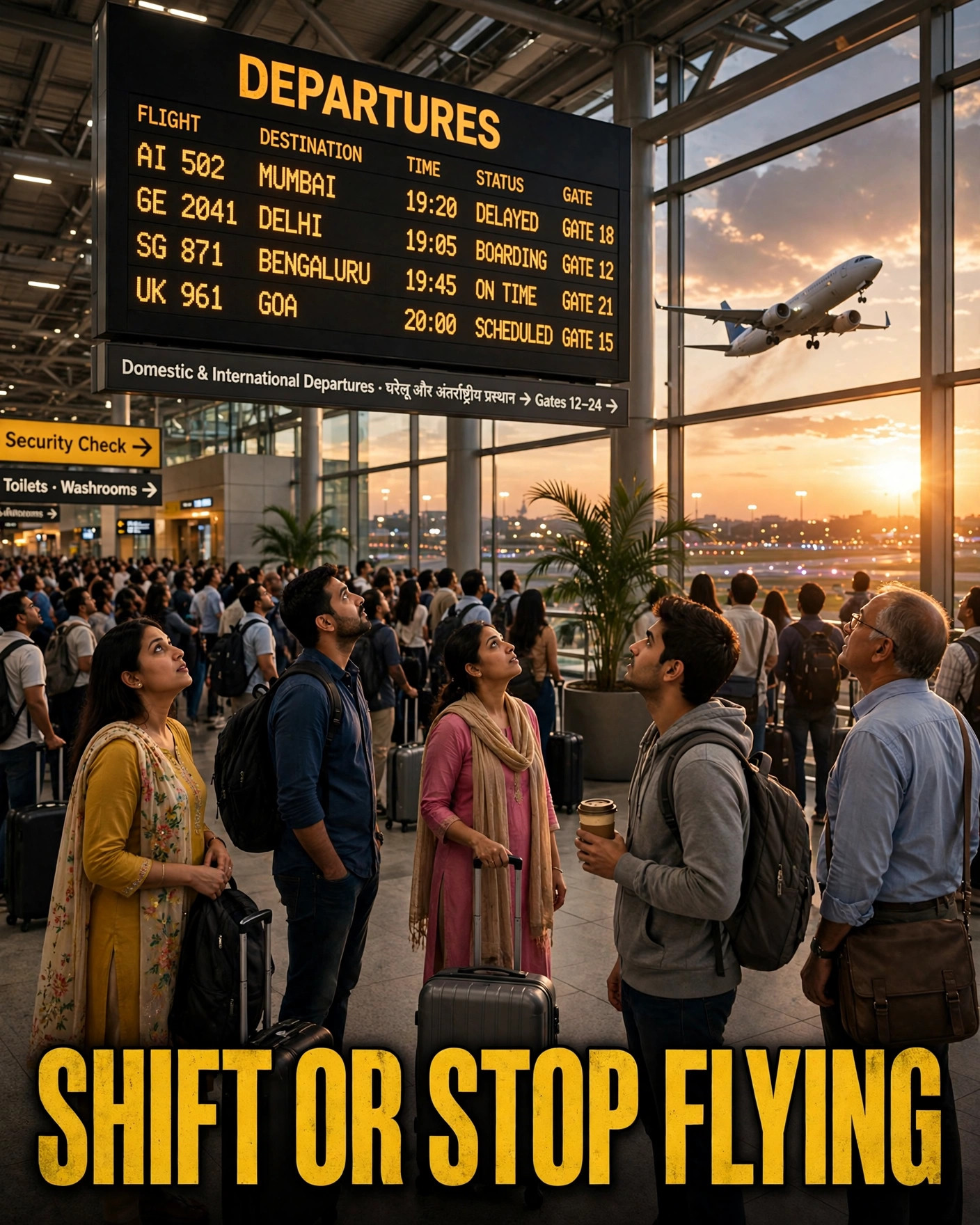
It is the bluntest message an Indian airport operator has sent to foreign airlines in years: shift some of your Mumbai flights to the new Navi Mumbai airport, or stop flying to Mumbai for a while. Adani Airports chief executive Arun Bansal delivered it twice in two days — first on 3 November at the India Aviation Summit, then again on 4 November — and the standoff it created now pits the operator of India’s second-busiest airport against some of the world’s biggest airlines, with passengers caught in the middle.
What Adani is proposing
Adani-owned Mumbai International Airport Ltd (MIAL) plans to shut Terminal 1 for redevelopment from April 2027 and shift 265 of 770 weekly international departure slots at Terminal 2 to Navi Mumbai International Airport (NMIA), cutting Mumbai airport capacity by 5 million passengers a year. The figures come from reporting by TradingView, citing Moody’s, and the Free Press Journal.
The shift is not a small trim. Moving 265 of 770 weekly international departure slots means more than a third of Mumbai’s weekly international departures would operate from a different airport, in a different part of the metropolitan region, while Terminal 1 is rebuilt. For airlines, that means splitting operations between two airports; for passengers, it means checking carefully which airport their flight actually leaves from.
The ultimatum, in Bansal’s words
Adani Airports chief executive Arun Bansal said on 3 November at the India Aviation Summit that international airlines unwilling to shift “could stop flying to Mumbai”, or temporarily suspend operations. He repeated the choice on 4 November: shift or suspend, then resume later with historical rights protected. The reports come from The Hindu and Tribune India, citing ANI.
The promise attached to the ultimatum matters as much as the threat. Adani says all historical slots will be restored once redevelopment completes in 2030. In other words, the operator’s position is that this is a temporary displacement, not a permanent loss of rights — airlines that move now, or pause and return, will get their historic slots back when the rebuilt terminal is ready.
Why foreign airlines are pushing back
Foreign carriers — Emirates and Air France-KLM among them — have opposed the move through the Airline Operators Committee-Mumbai, which represents 46 airlines. They wrote to Civil Aviation Secretary Samir Kumar Sinha opposing the move as “unilateral”, citing no consultation, split operations, and Navi Mumbai airport lacking infrastructure and demand. They want until October 2027. The account comes from the Indian Express, TradingView and the Free Press Journal.
Their objections are practical as much as principled. Split operations mean an airline must staff, equip and run check-in, baggage and ground handling at two airports instead of one. If Navi Mumbai lacks the infrastructure or the passenger demand they expect, a forced move could mean emptier flights and higher costs — which is why they are asking for more time, until October 2027, rather than the April 2027 start date.
Who has agreed — and where the flights go
Indian carriers have agreed to split operations: IndiGo, Air India Express and Akasa Air. IndiGo plans 84 weekly international departures to Navi Mumbai from February, according to the Free Press Journal and TradingView. That agreement gives the operator a working base at Navi Mumbai even while the foreign carriers hold out — and it shows the split is already under way on the Indian side.
The 14 destinations named for transfer are Bahrain, Dammam, Dhaka, Doha, Fujairah, Jakarta, Jeddah, Kathmandu, Kuwait, Madinah, Muscat, Ras Al Khaimah, Riyadh and Sharjah. The list is heavily weighted towards the Gulf and South and South-East Asia — the short- and medium-haul international routes that carry a large share of Mumbai’s international traffic, including large numbers of workers and pilgrims travelling to the Gulf and to Saudi Arabia.
What happens next
The open question is whether the Aviation Ministry will intervene or rule for either side. No decision had been reported in the sources checked for this article, and that is the gap to watch. If the ministry backs the operator, foreign airlines face the choice Bansal laid out — shift, or suspend and return later. If it backs the airlines’ request for more time, the April 2027 date could slip towards October 2027.
For passengers, the practical advice is simple for now: no flights have moved yet, and the change, if it happens, starts in April 2027. But anyone booking Mumbai international travel for next spring onwards should check which airport is on the ticket — Mumbai or Navi Mumbai — before travelling to the airport.
What is Adani asking foreign airlines to do?
Shift some Mumbai international flights to Navi Mumbai airport from April 2027, when Terminal 1 shuts for redevelopment — or temporarily suspend Mumbai operations and resume later with historical rights protected.
How many flights are affected?
265 of 770 weekly international departure slots would move to Navi Mumbai, cutting Mumbai airport capacity by 5 million passengers a year.
Which destinations are named?
Bahrain, Dammam, Dhaka, Doha, Fujairah, Jakarta, Jeddah, Kathmandu, Kuwait, Madinah, Muscat, Ras Al Khaimah, Riyadh and Sharjah.